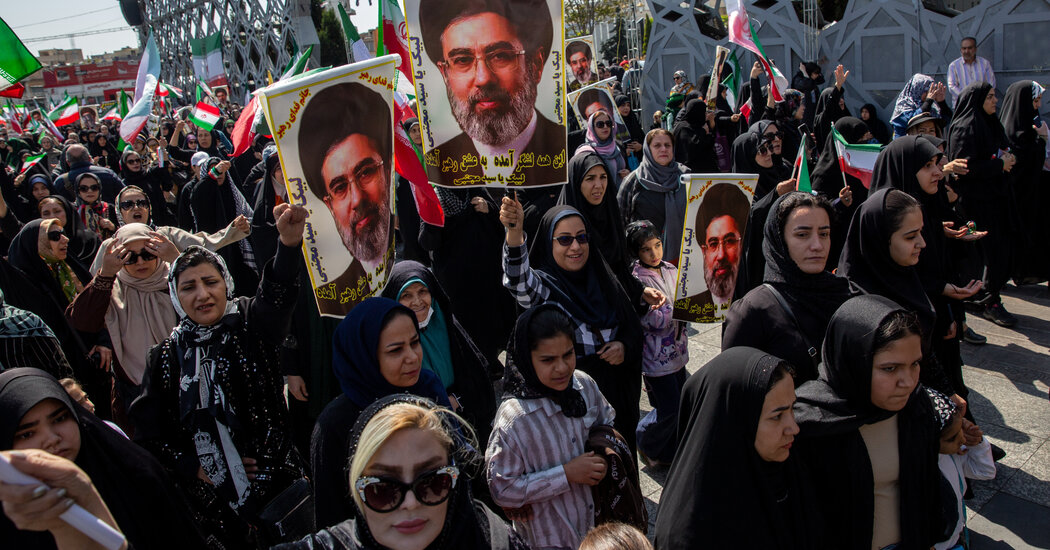

Ayatollah Mojtaba Khamenei’s appointment of hard-line loyalists to top jobs suggests he is prepared to keep the country on a war footing and to quash domestic dissent.
After almost six months in hiding, Iran’s supreme leader, Ayatollah Mojtaba Khamenei, has offered the clearest window yet into his vision for ruling the country, appointing a string of hard-line, veteran military commanders to top security roles.
The overhaul, which took place this month, signals that he plans to keep the nation on a war footing, analysts say — ready for open-ended confrontation with the United States and for keeping a lid on dissent at home among Iranians suffering the economic brunt of the conflict.
The appointments also reflect a leadership that is still struggling to devise a sustainable strategy for deterring Washington, analysts noted, as Tehran seeks a way to end the war without giving up the strategic leverage it has gained, most notably through control over the Strait of Hormuz.
The new security leaders will first have to navigate a period of limbo in the conflict. While the large-scale skirmishes have ebbed, neither Washington nor Tehran appears ready to make concessions to reach an agreement over the Strait of Hormuz and a 60-day deadline to agree a deal over Iran’s nuclear program expired on Monday. The standoff has left the region in a state of uncertainty that could erupt into full-scale war again at any moment.
Among the appointments made by Ayatollah Khamenei, Mohsen Rezaei, who led the Islamic Revolutionary Guards Corps during the Iran-Iraq war, was named head of the Supreme National Security Council. And Hossein Taeb, a cleric and former intelligence chief, was tapped to run the Basij, a powerful network of paramilitary forces often used to crush protests.
The overhaul also included a new general staff of the armed forces, a new head of the Revolutionary Guards and a commander of the Revolutionary Guards’ naval forces — a critical role as the Strait of Hormuz has become so important.