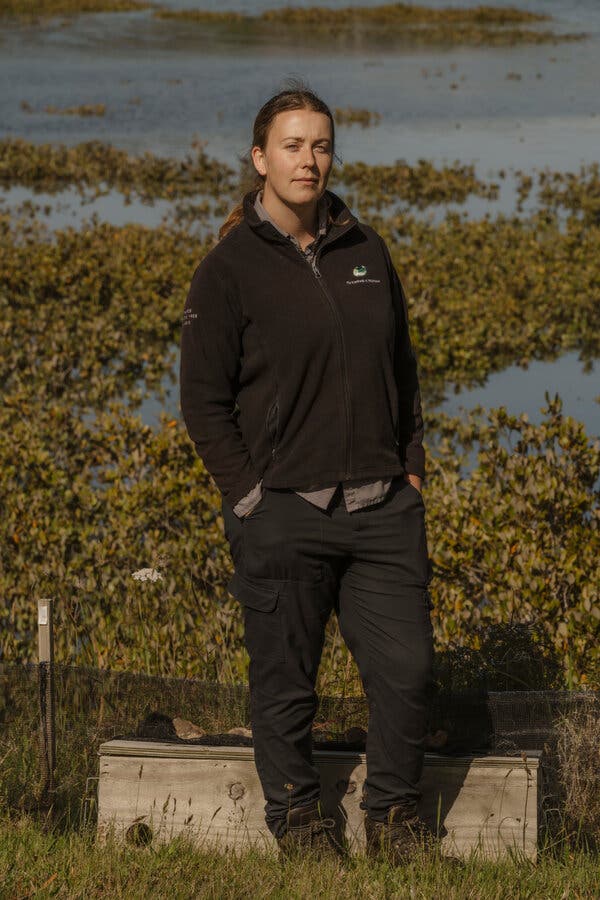
To catch a stoat, you need to think like one. For Tilde Sorensen, that means imagining having tiny legs and picturing which route the weasel-like creature might take as it haunts the wilderness of New Zealand, preying on unique birdlife.
Then she sets up a trap along that path.
“We’ve caught all of the ones that will happily go into a trap. So now we’ve got to figure out how to get the really shy ones,” Ms. Sorensen said of the stoat population on Waiheke Island, a 40-minute boat ride from New Zealand’s largest city, Auckland.
“We’re trying to work ourselves out of a job.”

Ms. Sorensen is a stoat-detect-and-respond coordinator for a project called Te Korowai o Waiheke, a Māori name that means The Cloak of Waiheke. It has captured more than 280 stoats since 2020 and, while it is not known how many remain, testing suggests the population has dwindled.
The campaign to eradicate stoats, and many other introduced species, has widespread support in New Zealand, where introduced predators, including rats and possums, kill about 25 million native birds each year.
Waiheke Island, which covers about 36 square miles, is home to 4,300 people, a number that swells to about 45,000 in the summer.