A lighthouse is one of the few structures nobody builds to sell. It exists to do one thing: keep ships off the rocks, and it does that long after the people who built it are gone.
Most companies are the opposite, built, in part, to be sold, and for most founders, that exit is the goal.
But a growing number of owners ask a different question: what if the point is not the exit, but keeping the business doing what it does, for employees, a community, a cause? The perpetual purpose trust answers that question by removing the company from the market entirely. A structure, like a lighthouse, to serve a purpose rather than to be sold. Two recent transactions show how this works: Patagonia’s 2022 transfer and the Grady-White Boats transaction announced in July 2026.
The Structure in Plain Terms
A perpetual purpose trust is a trust with no human beneficiaries. A conventional trust benefits named beneficiaries- a spouse, children, grandchildren, or a charity- who can eventually expect something from it. A purpose trust exists instead to advance a stated purpose, and its trustees answer to the mission, not to anyone waiting for a distribution.
Both transactions used a two-part design. The first is the purpose trust itself, which holds the company’s voting stock. At Patagonia, those shares were transferred to the Patagonia Purpose Trust; at Grady-White, the newly formed Grady-White Boats Perpetual Purpose Trust holds the voting shares. With no beneficiaries who can demand a payout and no owner who can cash out, no one can sell.
The second part is a nonprofit that holds the economic stock, the right to the profits. At Patagonia, about 98% of shares went to the Holdfast Collective, a 501(c)(4) organization directing roughly $100 million annually to environmental causes. At Grady-White, the non-voting shares flow to a newly created 501(c)(4) routing most profits to education, healthcare, conservation, and community causes.
Why Founders Choose It: Permanence and Philanthropy
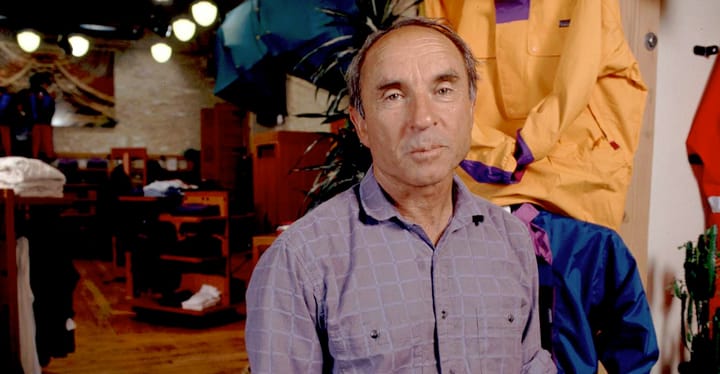
Permanence comes first. Eddie Smith bought Grady-White in 1968, when the company was near bankruptcy, and spent the next half-century building it into one of the most respected names in the marine industry. He turned down offers above $400 million, not over price, but because no buyer could assure him of maintaining the profit-sharing, quality standards, jobs, and dealer relationships that defined the company. Yvon Chouinard reached a similar conclusion at Patagonia.
A human fact also underlies the decision. Smith’s wife and only son both died in the years before the transaction, closing the ordinary succession paths. The purpose trust let him decide the company’s future when family could not.
The Tax Story Is Not the Headline
These transfers are easy to mistake for tax shelters. They are not.
Smith received no sale proceeds, gets no charitable income tax deduction, and expects a multimillion-dollar tax bill on the transfer. Chouinard’s plan was similar: no deduction and an estimated $17.5 million in gift tax on the voting shares.
Neither a business purpose trust nor a 501(c)(4) is a “charity” under the tax code. A gift to a 501(c)(3) generates a deduction; a gift to a 501(c)(4) does not. Whatever tax efficiency exists comes from what does not happen. Because the company is never sold, the founder never realizes capital gain, and the value is removed from the founder’s taxable estate.
The tax result is a consequence of the choice rather than the reason for it.
A Different Path: Newman’s Own
The two-entity split is not the only way to tie a company to a mission. As Jeffy Getty, Chief Tax Strategist at Callan Family Office, describes in “The Long Game,” Paul Newman built something different: the Newman’s Own Foundation, a 501(c)(3) private foundation, owns 100% of No Limit, LLC, the for-profit company behind Newman’s Own food products, with 100% of profits distributed for charitable purposes.
The tax treatment contrasts sharply. Because Newman left the company to a qualified charity by bequest, his estate qualified for a charitable estate tax deduction. Patagonia and Grady-White forgo any deduction in exchange for the control and advocacy flexibility only the two-entity design provides.
The Long-Term Picture—and Its Risks
The appeal of permanence is also its central risk: a purpose trust cannot be undone if circumstances change.
Capital is the first constraint: a company that can never be sold cannot easily raise equity because no ownership stake remains to sell. Governance is the second constraint. The structure depends on trustees carrying the founder’s intent forward for decades, and mission drift and board deadlock are real hazards. Lastly, the giving is only as reliable as the profits behind it. In a down year, less money flows to the cause.
Who This Is Actually For
This structure fits a specific owner: one who values mission and independence more than family wealth; who has no successor for the business, or fears heirs would sell it; whose company can sustain itself through operations; and who will accept real tax cost and give up the economics permanently.
It does not fit a family that needs liquidity, has heirs who want the business, or needs outside equity to grow.
The Planning Message
The perpetual purpose trust is a deliberate trade: the founder gives up the exit, the proceeds, and the deduction in exchange for permanence and a perpetual philanthropic engine. These transactions remain rare, roughly 81 U.S. companies today, up from 7 in 2018, but the number is climbing.
For ultra-wealthy families, the questions this structure forces into the open are often the most important ones: what is the company for, who is it for, and on whose terms? Those are legacy questions rather than tax ones, and the tax answers follow from them.
A lighthouse keeper does not own the light; the keeper tends it so others can rely on it long after the keeper is gone. The perpetual purpose trust asks a founder to become that kind of keeper.