China’s humanoid robots are achieving superhuman feats of athleticism. But how that translates into the real world is still an open question, experts said.

Chinese Robot Beats Usain Bolt’s 100-Meter Record
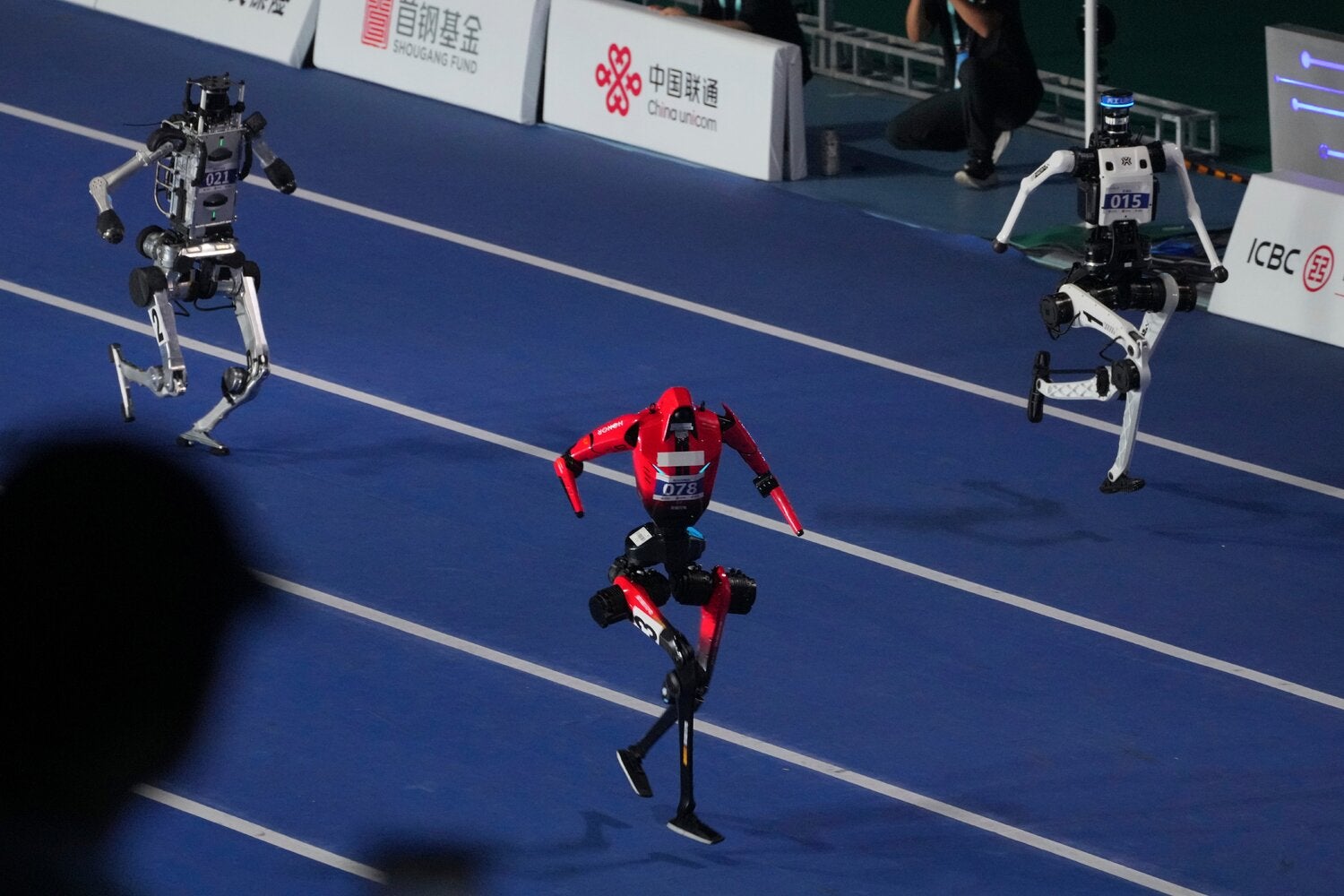
In 2009, Usain Bolt set the men’s 100-meter dash world record of 9.58 seconds at the World Athletics Championships in Berlin. On Saturday, a humanoid robot developed by the Chinese company X-Humanoid beat that record by 0.19 seconds, according to Chinese state media. The robot ended its sprint by slamming full speed into a padded wall, falling down and being carried away by human assistants.
High-profile feats of robotic athleticism have become increasingly common in China, where a humanoid robotics industry has flourished, aided by generous state support and billions in investment. Robots have danced and performed martial arts at the country’s top events.
At the World Humanoid Robot Games in Beijing over the weekend, they boxed and participated in soccer matches. One played tennis against a human opponent, moving across the court and angling itself to return volleys. Earlier this year, a robot ran a marathon faster than any human in history.
But what do these robotic superhuman feats amount to?
“Most of the sports the humanoids are doing don’t directly translate into utility for many of the mundane tasks people are trying to get humanoids to perform, like being useful around the house,” said Michael Milford, a professor and director of the robotics center at Queensland University of Technology in Australia.
The robots are “capable in very specific and somewhat contrived events,” he said.
Chinese media has also acknowledged the gulf between athleticism and real-world applications in its coverage of the games.
“A factory robot does not need to win a sprint, nor does a service robot need a medal,” read a commentary in Xinhua, the state news agency. “But every gain in speed, stability and precision on the competition floor can bring robots one step closer to becoming genuinely useful beyond it.”