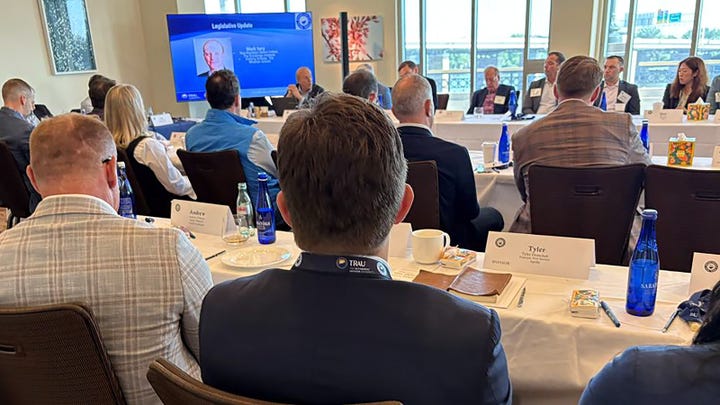

A recent DCIIA/TRAU study among 15 DC recordkeeping senior executives registered to attend the 2026 TRAU RPA Record keeper RoundTable and Think Tank revealed persistent, as well as evolving challenges of competing in the recordkeeping industry. In the interviews, one simple question was asked: What keeps you up at night when you consider the opportunities and threats to the DC recordkeeping industry, and your firm, specifically? Some challenges heard in past TRAU Recordkeeper Roundtables were echoed in 2026. Others reflect the ever-evolving dynamics of the recordkeeping industry specifically, and the defined contribution space generally.
Fee Compression and Service Expectation Expansion
Fee compression remains a top-of-mind pain-point. Recordkeepers described a pincer effect of plan sponsors and advisors declining willingness to pay as much as they are currently and increasing service demands. This effect is exacerbated as recordkeepers try to accommodate the rapid growth of small/start-up plans whose service/fee expectations are often just as demanding as larger plans.
Fee Compression is Driving the Continued Search for New Revenue Sources
Recordkeepers are Identifying alternative/non-traditional revenue sources to cope with fee compression. Offering wealth services to terminating participants (i.e., convergence) is front and center as a partial solution to margin pressures. Some record keepers with internal wealth advisory divisions are able to provide these services directly while other are looking to revenue sharing with outside wealth advisors with whom they shared termination information. Others even talked about possibly charging fees if they share data with wealth advisors.
Innovation Concerns— Retirement is Not a Vertical Anymore
The search for new revenues and a desire to provide participants with a complete pathway to a successful retirement has led to retirement not being a vertical anymore. Retirement, record keepers explained, needs to be viewed across many financial avenues. Record keepers are actively seeking the most efficient and effective ways to serve participants through innovation. But that has significant cost and complexity consequences. That is, managing the complexity introduced by legislative changes (e.g., Secure 2.0), while also being innovative in a service-friendly way is far easier said than done.
Technology—A Rapidly Moving Target
Record keepers explained it is very expensive to implement new/more technology to create a more efficient and secure recordkeeping platform. Staying ahead of the rapidly increasing number of fraud attempts is further mounting costs. Consequently, record keepers need to use technology is the smartest way possible. However, the pace of technological change is creating concerns about picking the right path. Record keepers ask if a technological breakthrough will emerge 6 months from now, leaving them on the wrong vector.
About AI—Adapting to Its Impact
All the record keepers are adopting artificial intelligence. Although AI is seen as essential for recordkeeping platforms, many concerns emerged. The impact on the number and roles of staff was on everyone’s mind. Some predict that two-to-three years in the future only half their current staff will be needed. And if AI is replacing entry level jobs, they wonder how that will affect the skills profile of people they are hiring and if staff development will be affected.
The accuracy of AI was also a major concern. Record keepers agreed that AI is only as accurate as the data it can access. And if AI doesn’t find the data it needs, hallucination problems may emerge. They also feel people who are experts at asking AI questions are needed as changing one word on an inquiry produces a different answer. Consequently, different types of staff will still be needed, eating into the staff savings they predicted. Furthermore, if mistakes are made, they question who is responsible.
Finally, the record keepers’ enthusiasm for AI is not necessarily shared by their plan sponsors. They report that many plan sponsors are skeptical about AI as a way to meet escalating demands for speed, accuracy and white glove treatment without creating fiduciary risk.
Participant Concerns Remain in Focus
As in the interviews with record keepers before last year’s roundtable, concerns about participants emerged. Specifically, many wondered if they (and the DC industry in general) are doing enough to generate a steady stream of income in retirement for participants, which they see as the ultimate goal. And adjacent to that, record keepers ask themselves if they are doing enough to meet the growing demand for hyper-personalization?
PEPs
PEPs concerns were raised by some record keepers. While some are ensconced in the PEPs market, others are still wondering if it is a market they should pursue. Whether through a PEP or not, the larger concern is whether they are doing the right things to ensure that plan sponsors, and especially start-up plans, are getting a great retirement plan that is not a huge administrative and cost burden to them.Clearly, the recordkeeping industry is struggling with issues some describe as existential. And hearing many of the issues coming up again after a year has passed confirms these issues are both perplexing and persistent. A great deal of faith is being put into AI as a solution but recordkeepers feel the technology has to evolve more. As importantly, will plan sponsors accept AI into their plans as a solution or see it as a possible source of fiduciary risk? We will revisit these issues again at the next TRAU Record Keeper Roundtable in