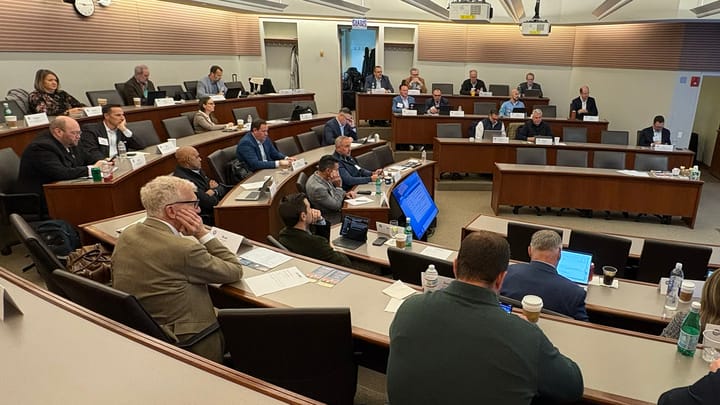
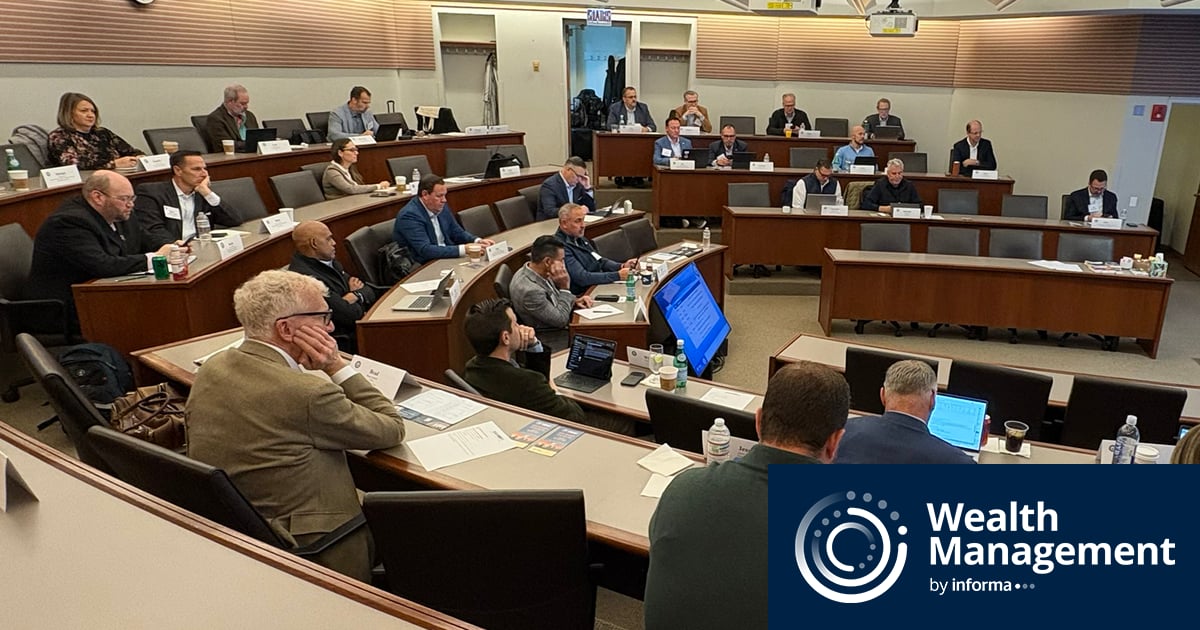
Neither the Microsoft email outage nor the FAA ground stoppage deterred senior leadership at the top RPA and RIA aggregators from attending and engaging in the 9th Annual RPA Aggregator Roundtable held at the University of Chicago’s Gleacher Center Nov. 12-13.
The main topic was the convergence of wealth and retirement at the workplace and, for the first time, the role of benefits. The question is no longer whether convergence is real but how to execute effectively and what it includes.
Conversations centered around how to engage participants, wealthy and not so wealthy, which requires data and better use of integrated technology, especially artificial intelligence and how to get wealth advisors interested in 401(k) plans.
Plan sponsors, who had been reluctant to allow advisors and providers to offer wealth and planning services to their participants, are now requiring it. With plan fees declining, both record keepers and advisors must offer participant services to be competitive and survive, which can create conflict. All of which, along with pooled employer plans, are fueling industry consolidation.
Pre-roundtable surveys by Warren Cormier, director emeritus at DCIIA’s RRC, with aggregators highlighted these issues:
-
Building advisor support, which requires integration of acquired firms
-
The role of AI
-
How to engage participants with advisor-managed accounts, a good tool, especially for low account balance participants
-
Data sharing difficulties due to record keeper rigidity
-
Fee pressure—do more for less
-
The need to change business models
The discussion began with Transamerica’s Brian Nickolenko asking, “What is rigidity?” That led to a long discussion about data, which everyone agreed is required to engage and help participants. Audrey Wheat from Captrust said her firm is careful about getting sensitive participant data like birthdate (they only get month and year) and that advisors are not allowed to use it to cross-sell wealth services. Nickolenko noted, “Data transfer is easy—legal issues and oversight are not.”
So, plan sponsors want advisors and providers to engage and help participants; advisors need it to leverage convergence; and, according to FIS’s Bill Reilly, record keepers are asking for help expanding access. The defined contribution industry has been trying for decades to agree on a data format to facilitate sharing, but the latest effort by DCIIA and SPARK failed because, according to DCIIA’s Lew Minsky, they could not get consensus and, though initial discussions were about plan data, many could see that participant data was next.
Data is being shared in fits and starts. Morgan Stanley gets daily feeds from 14 record keepers; Broadridge has data on almost 500,000 plans—at other aggregators that number exceeds 600,000. Brad Arends at Intellicents noted very little data is needed to create a foundational financial plan covering budgeting, debt management, emergency savings, life insurance and retirement, which he thinks should be a tax-deferred employee benefit. Many advisors are getting the data plan by plan, according to World Investment Advisors’ Jennifer Tanck, but, like most other aggregators, it is not centralized.
Matthew Eickman from Fiduciary Law Center noted that recent court settlements limiting use of participant data to cross sell are the result of providers not being upfront or even lying.
The discussion about how benefits should be part of the convergence discussion started with one attendee noting that they represent bigger, higher margin opportunities when advisors see themselves as “workplace consultants” breaking down silos. Tanck commented that while the compensation issue has been solved when benefit brokers and RPAs partner, which is happening in “pockets,” there are fundamental cultural differences. Benefits brokers are more transactional while RPAs are more relationship-focused—even when the two groups get together, they rarely mingle. Marsh McLennan Agency’s Bill Thompson said they are still struggling to pay non-licensed brokers on retirement plan referrals.
Another attendee postulated that the average employee is overinsured by $2,400 annually, which could increase retirement savings by $200 billion. John Jurik from Gallagher commented that employers were less price-sensitive when it comes to benefits and might be more willing to use that budget to support financial wellness. According to Wheat, Captrust deploys financial wellness consultants parallel to participant educators at record keepers.
The second day opened with a discussion about fees and alternative investments. Eickman noted that many court cases, like Bechtel, state that a plan does not have to select the cheapest options, while Broadridge’s John Faustino commented that advisors’ fees are increasing for small plans.
When asked about hot investment topics, Hub International’s Brian Collins brought up private markets, noting that advisors need more education. Blue Owl Capital’s Greg Porteous commented that while they are getting more looks, there is still a mixed response, with many waiting for the final DOL rule. He noted they are trying to get things done before the new Congress convenes.
AI solutions around wellness were brought up—Minsky noted that some providers were offering them for free and that others believe they can replace humans. All of which led to the question of why participants are not engaging. (k)New Era’s Bill Chetney commented that it’s critical for the plan sponsor to make a commitment and that participants engage when there is a need. When IRALOGIX’S Mitch Haber was asked by a client, “What’s the best 401(k) plan you have ever seen?” He replied that a retail plan in Hawaii was best because of the core values of the plan sponsor. “It’s about how leadership cares.”
For the first time in any Roundtable, discussion about PEPs was both lively and positive. Cerulli’s Chris Bailey cited 2025 numbers of $37 billion, up from $21 billion, with 2026 midyear up 30% to 40%, projected to reach almost $60 billion, gaining traction not just in the small market. Firms like Transamerica, Aon, Paychex and Voya are committed to offering PEPs.
Minsky commented that if new legislation allowed for a complete transfer of fiduciary liability, a lot more large plans would adopt a PEP, with many CFOs asking, “How do I get out of it?”
Wheat asked whether PEPs would solve the data issue, with Minksy conjecturing that the PPP may be more willing to adopt retirement income and privates. They could also fuel consolidation of asset managers, record keepers and even advisory firms. Arends said that the cannabis PEP record kept by Empower is exploding.
“It has to be part of the vernacular,” noted Tanck. “If an advisor does not mention it, they could lose the plan.”
How to get wealth advisors interested in 401(k) plans is an issue that many broker/dealers and RIA aggregators struggle with. Concurrent’s David Montgomery, with $45 billion AUM, half in retirement, noted that wealth advisors do not like the complexity and low fees but get more interested if they can move high-net-worth clients into a brokerage account where they can earn 1% fees without the issue of credential sharing that firms like Pontera face.
Brian Brashaw, now at Merit Financial and formerly head of retirement at Osaic, commented that convergence is not a strategy—it needs to be a long-term commitment and that advisory firms should not try to own all the technology.
Finally, an attendee asked during a break why the industry cannot get its act together sharing data after so many years and attempts. They also commented, “The day of the lone advisor is over and leadership at broker/dealers and aggregator need to commit [to convergence].”
Meeting the holistic financial and benefits needs of almost 100 million DC participants and over 165 million workers covered by their employer’s health and benefits plan will require commitment from plan sponsors and advisory firms at the highest level to collaborate, not compete, with their record keeper partners. No one firm can do it alone, just as solo advisors cannot. Providers have the capital, technology, and data, but plans and participants want and deserve to be served by fiduciary advisors who help with wealth, retirement, and benefits, using data wisely and safely and leveraging technology, especially AI, under a new business model that requires financial wellness consultants.
Cannot wait for the Dec. 10-11 Convergence Roundtable to be held at Morningstar’s Chicago offices, where all groups (TPAs, broker/dealers, record keepers, aggregators and their partners) convene to discuss this existential issue—be sure to register. Seats are nearly sold out.