
The unusual weather pattern and dried out peatlands, a kind of wetland, have been behind some of the country’s worst fire seasons. This year could be one.
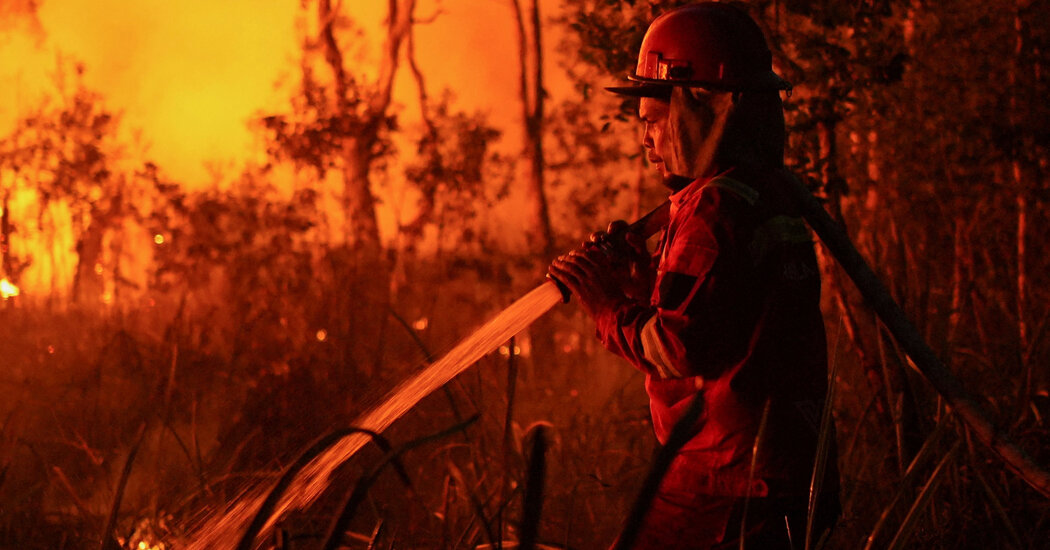
The wildfires have been burning in the peatlands for weeks, belching acrid smoke over West Kalimantan Province in Indonesian Borneo. In the capital, Pontianak, everyone in Alfian Effendi’s family has developed coughs.
The thick haze, which has also drifted into Malaysia, has forced schools in the area to temporarily suspend classes, including for Mr. Alfian’s four children, whose noses are running from the smoke. Local officials have distributed masks and urged people to stay indoors. But that is a luxury that Mr. Alfian, 37, the owner of a chicken slaughterhouse, said he does not have.
“We all have to work to earn a living, right?” he said in a phone interview. “We know we are risking our health, but what choice do we have?”
Wildfires are a seasonal occurrence in many parts of Indonesia, a vast archipelagic country, so this trade-off is nothing new for Mr. Alfian. But there is reason to fear that this year may be especially bad, according to experts. Indonesia is in the grip of a “super” El Niño that will likely suppress the rains that would otherwise extinguish the fires.
And the fire season has yet to peak.
“The question now is whether the current acceleration continues through September and October and first two weeks of November,” said David Gaveau, a landscape ecologist and the founder of Nusantara Atlas, a website that tracks fires and deforestation in the region. “New mega fires may appear in southern Sumatra in September,” he added, referring to Indonesia’s third-largest island.
As of Aug. 20, there were more than 224,000 hot spots suggesting fire activity across Indonesia, according to Nusantara Atlas’s satellite data. Mr. Gaveau said that this was an unusually high number that resembled the trend in 2019, one of Indonesia’s worst fire seasons, in which he said as much as 7.7 million acres of land burned.