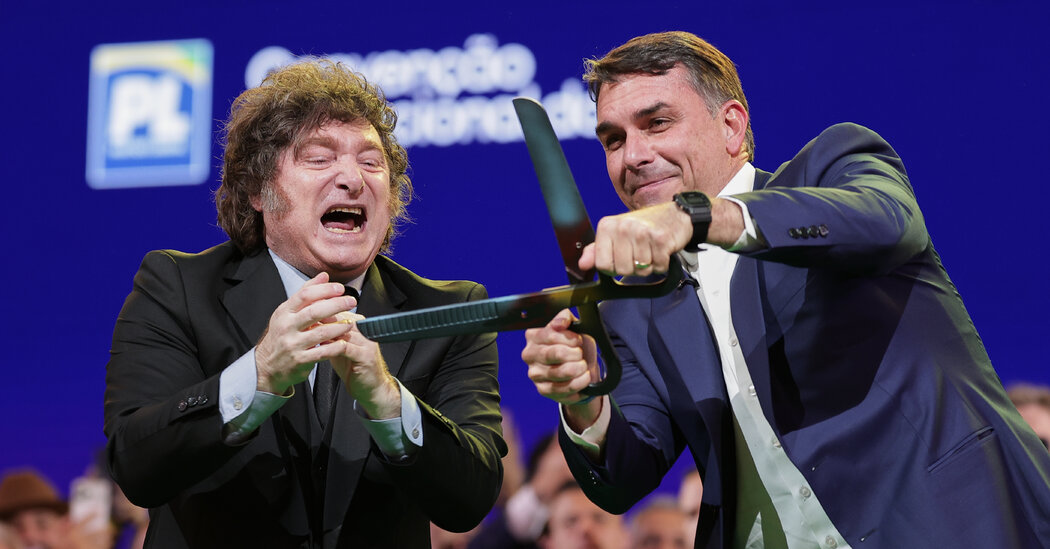

With cheers, endorsements and insults for rivals and “wokismo,” a new crop of right-wing leaders are openly stepping into one another’s elections.
Dancing, beating his chest and hugging Flávio Bolsonaro, the right-wing candidate seeking to become Brazil’s next leader, President Javier Milei of Argentina launched into a tirade against Brazil’s current president, calling him a “thief” and “socialist trash.”
Mr. Milei was seeking to aid Mr. Bolsonaro, who is running against President Luiz Inácio Lula da Silva in this October’s election, but that brash display of camaraderie in São Paulo came with consequences. After the event last month, Brazil recalled its ambassador to Argentina, generating the most serious rift in decades between South America’s two largest economies.
The episode was only the latest example of the personal alliances and international endorsements reshaping Latin American politics, as right-wing candidates win elections across the region.
Sharing hard-line policy proposals, campaign mascots and videos of themselves together, they are sending a message of right-wing unity. And, borrowing heavily from President Trump’s playbook, they are openly stepping into neighbors’ elections.
The ascent of right-wing leaders comes as many Latin American voters are frustrated with soaring crime and insecurity, and with what they see as left-wing leaders’ failure to deal with these and other issues, including the economy and immigration.
Like-minded leaders banding together is nothing new on the right or the left, as in the long alliance between Venezuela and Cuba. But this new crop of conservative leaders — many of them political newcomers — is promoting a new, brazen, often social media-powered version of this dynamic.