
The latest analysis from Fidelity’s portfolio construction team finds that amid a tumultuous 2025 and expected volatility in 2026, advisors have become increasingly reliant on ETFs and that U.S. equities remain the bulk of client portfolios.
That message was true before the U.S. and Israel launched an attack on Iran over the weekend, and Iran’s wide-ranging response, including bombing sites in multiple countries and disrupting the global energy market. But the additional disruption confirms that advice.
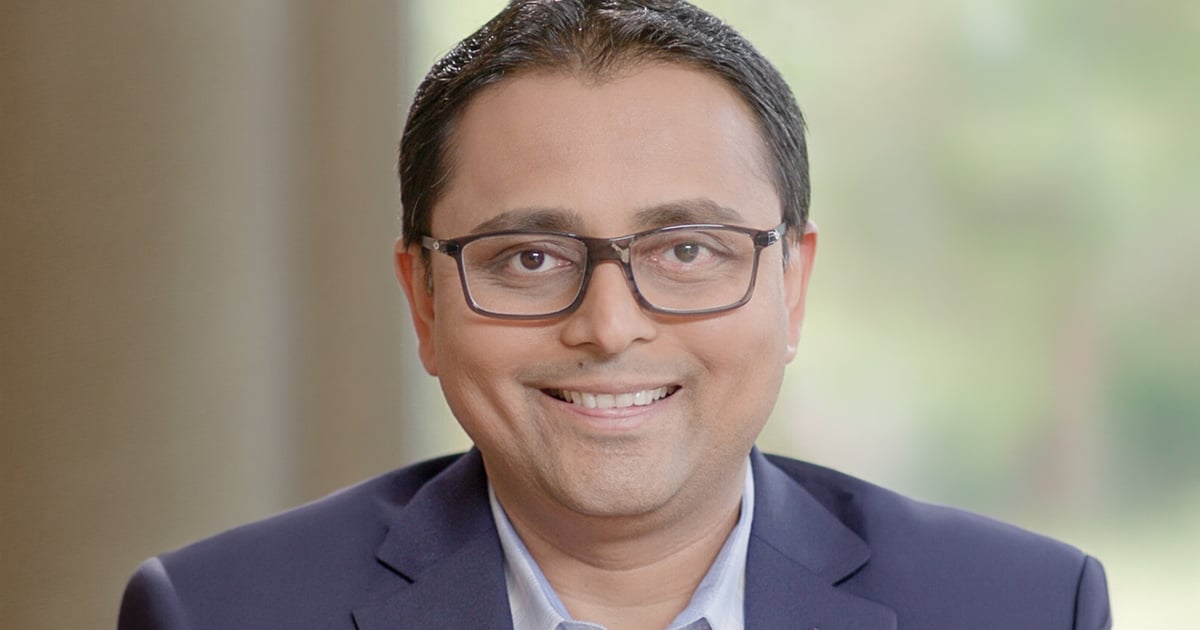
“If 2025 taught us anything, it’s that markets can react to headlines, but portfolios win on discipline,” said Mayank Goradia, head of Portfolio Construction and FIWA CIO at Fidelity Investments. “In 2026, resiliency is not about predicting the next shoe to drop. It’s being positioned for every outcome. Diversification isn’t a defensive posture anymore. It’s an offensive advantage. That’s a portfolio mindset that every investor needs to embrace with what 2026 will throw at us.”
Overall, Fidelity’s analysis of advisor-constructed portfolios found that in the fourth quarter of 2025, the average portfolio consisted of 72% equities, 23% bonds and a 4% allocation to cash. The analysis is based on 3,371 portfolio reviews and portfolio quick checks conducted on Fidelity’s platform between Oct. 1 and Dec. 31, 2025, as well as Morningstar data.
Of the equities sleeve, 79% is allocated to U.S. equities and 21% to international. Fidelity noted that the U.S. allocation remains high by historical standards. In 2021, for example, the split was 73%/27%.
In terms of market segments, the average portfolio has 64% allocation to large caps, 23% to mid caps and 13% to small caps. Allocations to growth were 29%, value was 29%, and the remaining 41% was allocated to core.
On the fixed-income side, the 23% allocation is at the low end compared to historical balances. Advisors, on balance, have reallocated from fixed income to equity. Of the fixed-income allocation, 80% is investment-grade and 20% is high-yield.
More than half of advisor portfolios (59%) had an allocation to ETFs, with an average of 54% of an advisor’s portfolio allocated to ETFs. The highest use of ETFs was within the US equity sleeve, where the average allocation is around 33%.
Notably, while the majority of ETF allocations are passive funds, active ETF usage continues to climb. In the latest reading, 37% of portfolios included active allocations, up from 13% three years ago.
In addition, the average portfolio includes 13 holdings from six asset managers, with underlying blended fees of 49 basis points.
Wealth Management spoke with Goradia about the analysis and what it might mean for the rest of 2026.
This interview has been edited for style and clarity.
Wealth Management: Can you talk about how this analysis is put together and some of the high-level findings?
Mayank Goradia: We talk to thousands of financial advisors in any given year. 2025 will be remembered as “resilient diversification.” If we dial back in terms of what happened in 2025, markets were volatile but resilient.
The U.S. rolled out reciprocal tariffs, which prompted the worst two-day drop in the market in years. Yet, the market adapted. Truces and pauses emerged, and the U.S. economy proved to be sturdy. Real GDP wrapped up 2025 up 2.2%. Meanwhile, the Fed pivoted with three cuts in September, October and December while headline CPI ended at 2025 2.7%. That soft landing mix set up a powerful late-year rally. So, if you think about what worked for investors in 2025, large cap tech did its job, but diversification finally paid the real alpha.
S&P total returns were at about 18%. It was the third straight year of double-digit gains. However, developed international equities were up 31%, outpacing the U.S. for only the third time in the last 10 years, and emerging markets were up 33%, the best performance since 2017. The U.S. aggregate bond index was also up 7%, its best year since 2020.
WM: How does that set things up for this year?
MG: We’re focused on three things. One is the AI super cycle, which is moving from “buy chips” to “Show me the ROI.” Hyperscaler capex was massive in 2025 and likely will be greater in 2026—from $500 billion to $600 billion. But the market is shifting from building infrastructure to productivity and P&L.
A second theme is central banks. We are in a simultaneous holding situation. They synced, easing in 2025. They are keeping the spotlight on fundamentals.
A third is the K-shaped economy and market disruption. Spending is bifurcating by income cohort, and returns have fragmented between AI-enabled industries and everything else. That’s why active management will matter in 2026.
To use a football analogy, in 2025 the star quarterback was tech, and it played well, but the offensive line and special teams—international equities, bonds and gold—won the field position battle. Heading into 2026, advisors aren’t calling deep routes. They are re-architecting the playbook to avoid overexposure to yesterday’s MVPs.
WM: What does that look like in terms of portfolio construction?
MG: ETFs are now the default tool in the toolbox. We’ve had many conversations on this. They are becoming the aggressively preferred choice. In the fourth quarter review, nearly 60% of incoming portfolios used ETFs, and allocations have now surpassed about 50% within equities exposures. Active ETFs are featured in more than 1/3 of portfolios, nearly triple what we saw in 2022, which is mirroring broader industry momentum.
The second thing we say is that equity was “risk on.” Equity weights move to the low 70%, which is consistent with above-trend growth expectations. With U.S. large caps, earnings did the heavy lifting. But with disinflation and lower policy interest rates, small caps may finally get a better footing.
International remains underweight. Despite the 2025 heroics, non-U.S. equities are at 20-ish percent, well below pre-pandemic norms and leaving room for rebalancing.
Meanwhile, fixed income is back to doing its job. Advisors kept bond allocations lean, but intermediate-term Treasuries look attractive.
Liquid alternatives also came to the defense. Allocation to market neutrals through liquid alts ticked higher at about 15% of incoming portfolios, which uses them as an insurance policy against all the geopolitical risk.
In my conversations with advisors, we’re saying volatility is now a feature, not a bug. Discipline and diversification still win in cycles. In 2026, precision across ETFs, SMAs and alts may matter as much as exposures themselves.
WM: In terms of ETF usage, we’ve seen an explosion of active ETF launches, and your analysis does show a tick up in usage. But isn’t it also the case that advisors want to see some track record before inclusion? How is this process playing out?
MG: Advisor usage of ETFs mirrors the maturity of the ETF market itself. There are more ETFs on the equity side than fixed income. On the equity side, there is more ETF usage on domestic vs. international.
But as ETFs build more track record, scale and efficiency, investors are not worked up about liquidity or the bid/ask spread, these are places where ETFs have checked all the boxes and have seen rapid adoption. We’re also seeing some breadcrumbs pointing to where ETFs can be used next in fixed income, starting with intermediate-term Treasuries or investment-grade.
There is also a difference between advisors by type. For advisors working at a broker/dealer, everything has to be approved by the home office. It’s a gated process where they look at track record, AUM and performance before letting advisors use them.
The RIA side is typically the first to adapt, and where track record may apply less for newer, niche products like derivatives or options-based ones. It’s a place where you see some advisors are not afraid to jump in, even if they don’t have a track record.
WM: In terms of the 70% allocation to equities, how much of that is by design vs. portfolio composition drifting due to relative performance and a lack of rebalancing?
MG: I think it’s a combination. In some places, advisors are OK with making some tactical overlay bets from fixed-income to equities. They may balance that overweight position with a strategic hedge using market-neutral funds. In a second case, where we haven’t had rebalancing or a strategic weight and where markets may be driving an overallocation to equity, I expect that if they are using range-bound rebalancing, they will go back and rebalance.
WM: Any last thoughts?
MG: Given everything we know about what headwinds and tailwinds exist, how should an average FA be thinking about portfolio construction? Do not let concentration creep into a portfolio. 2026 is shaping up as a year where fundamentals, dispersion and global diversification are going to matter more than macro betting. Keep U.S. quality core, rebuild international exposures, retain intermediate fixed-income and use ETFs, SMAs and alternatives for risk control. It is less about forecasting outcomes and more about building resilience to withstand multiple scenarios.
If 2025 taught us anything, it’s that markets can react to headlines, but portfolios win on discipline. In 2026, resiliency is not about predicting the next shoe to drop. It’s being positioned for every outcome. Diversification isn’t a defensive posture anymore. It’s an offensive advantage. That’s a portfolio mindset that every investor needs to embrace with what 2026 will throw at us.